Soft shades
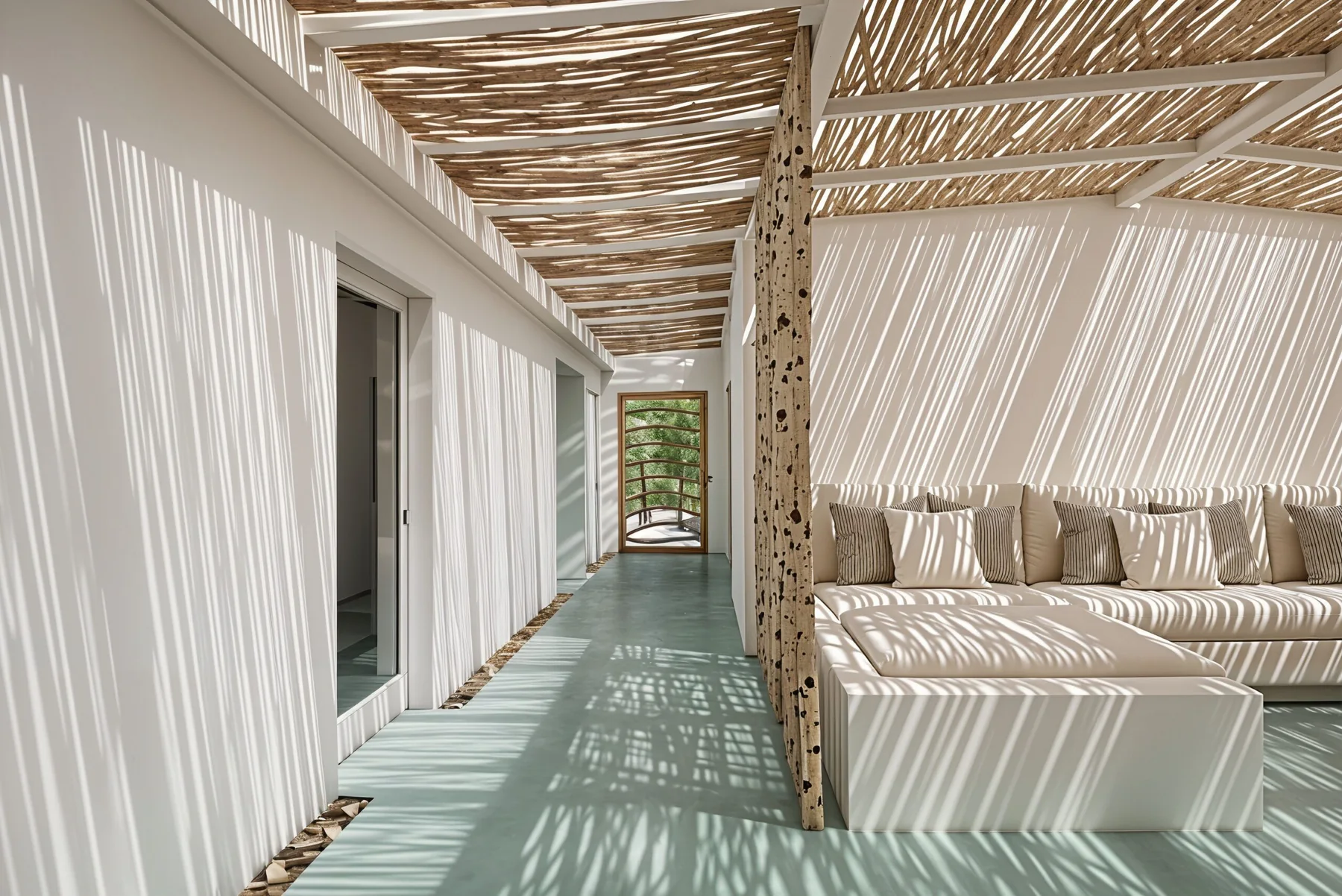
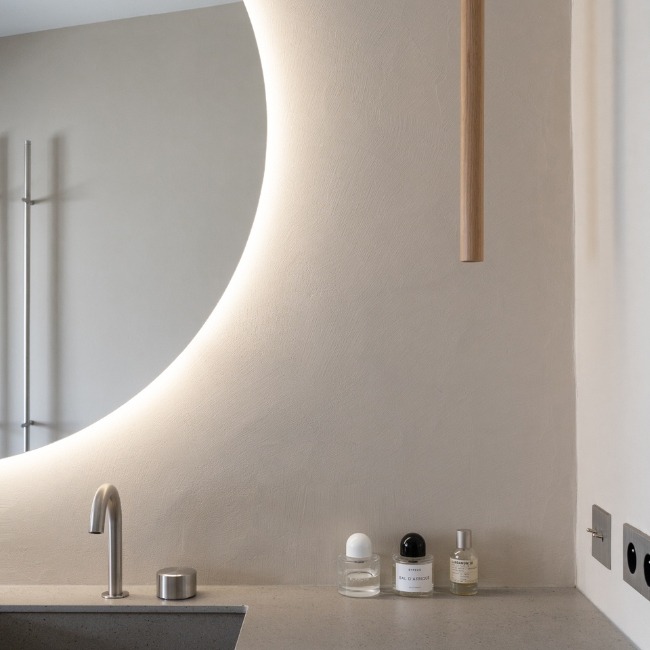
Pale tones, clean lines and a few metallic reflections. An atmosphere whose richness emerges as the light changes.
The art of living with materials
Light enters. A surface invites the touch. From floors to walls, microcement creates a continuous space where colour surrounds you and the eye comes to rest.
There are rooms we pass through.
And rooms where we rediscover time.
A bath, the morning quiet, a few moments in front of the mirror. The bathroom holds these simple rituals, away from the pace of the day.
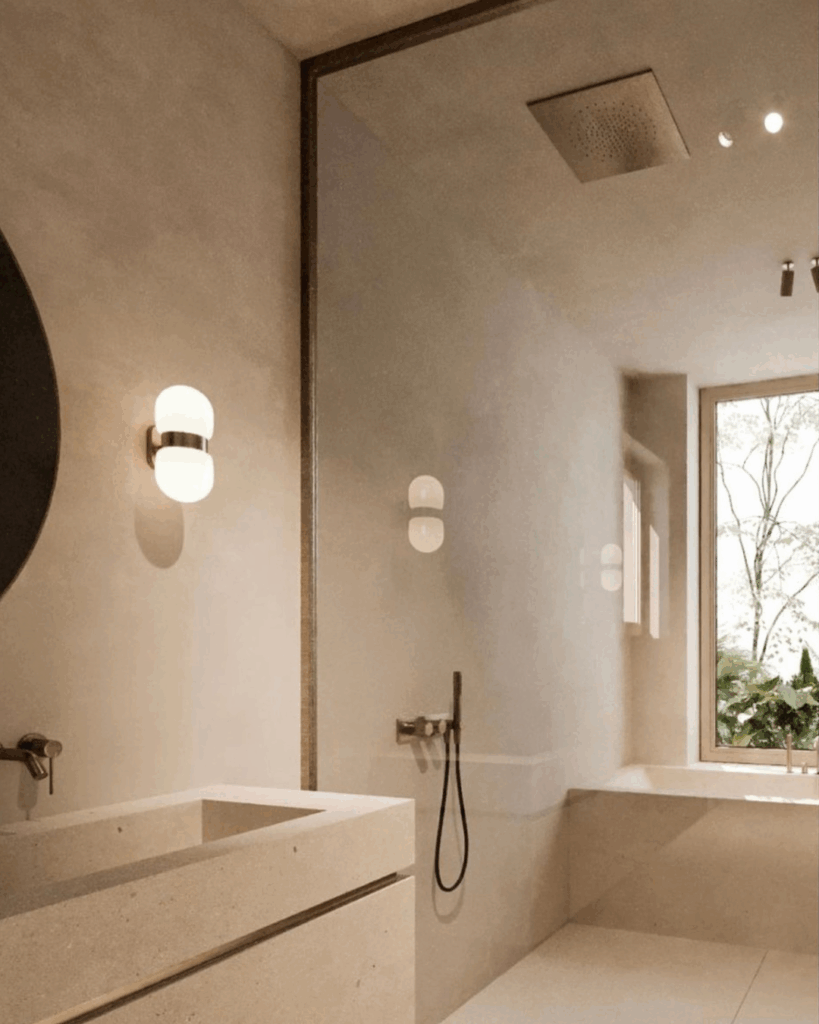
Quiet lines
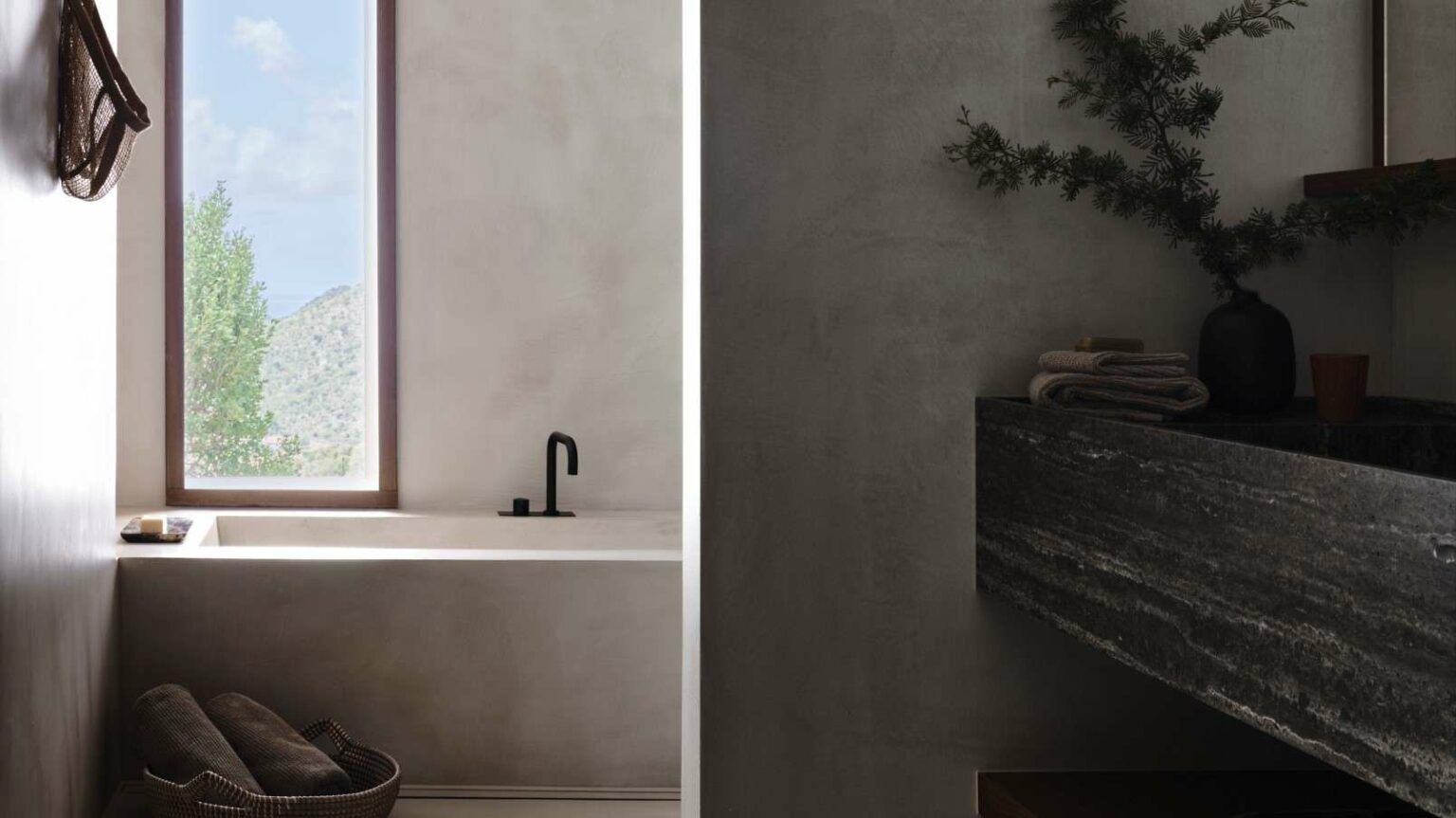
Microcement lets light travel across surfaces. The eye follows a curve, a step, the edge of a basin. Visual continuity lightens the space and can make a small bathroom feel more open.
In a pale shade, the material becomes understated. In a deeper colour, it creates a more enveloping presence. Subtle texture and the variations left by the hand give it a softness you can also discover through touch.
Explore colour harmoniesThree ways to live with colour
Pale tones, clean lines and a few metallic reflections. An atmosphere whose richness emerges as the light changes.
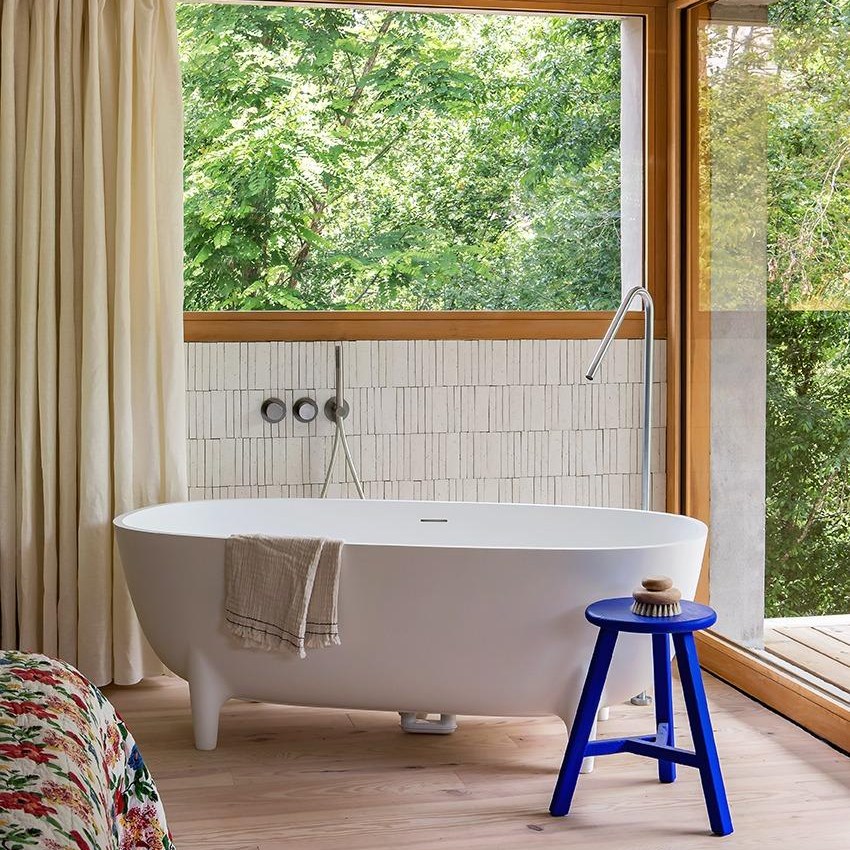
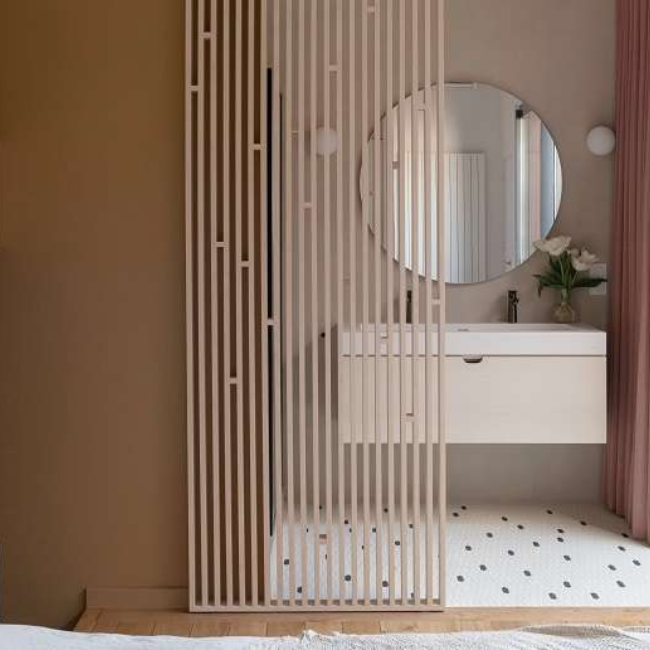
Wood brings warmth to the composition; mineral surfaces soften its edges. Carefully chosen objects and light from the side are enough to create an intimate space.
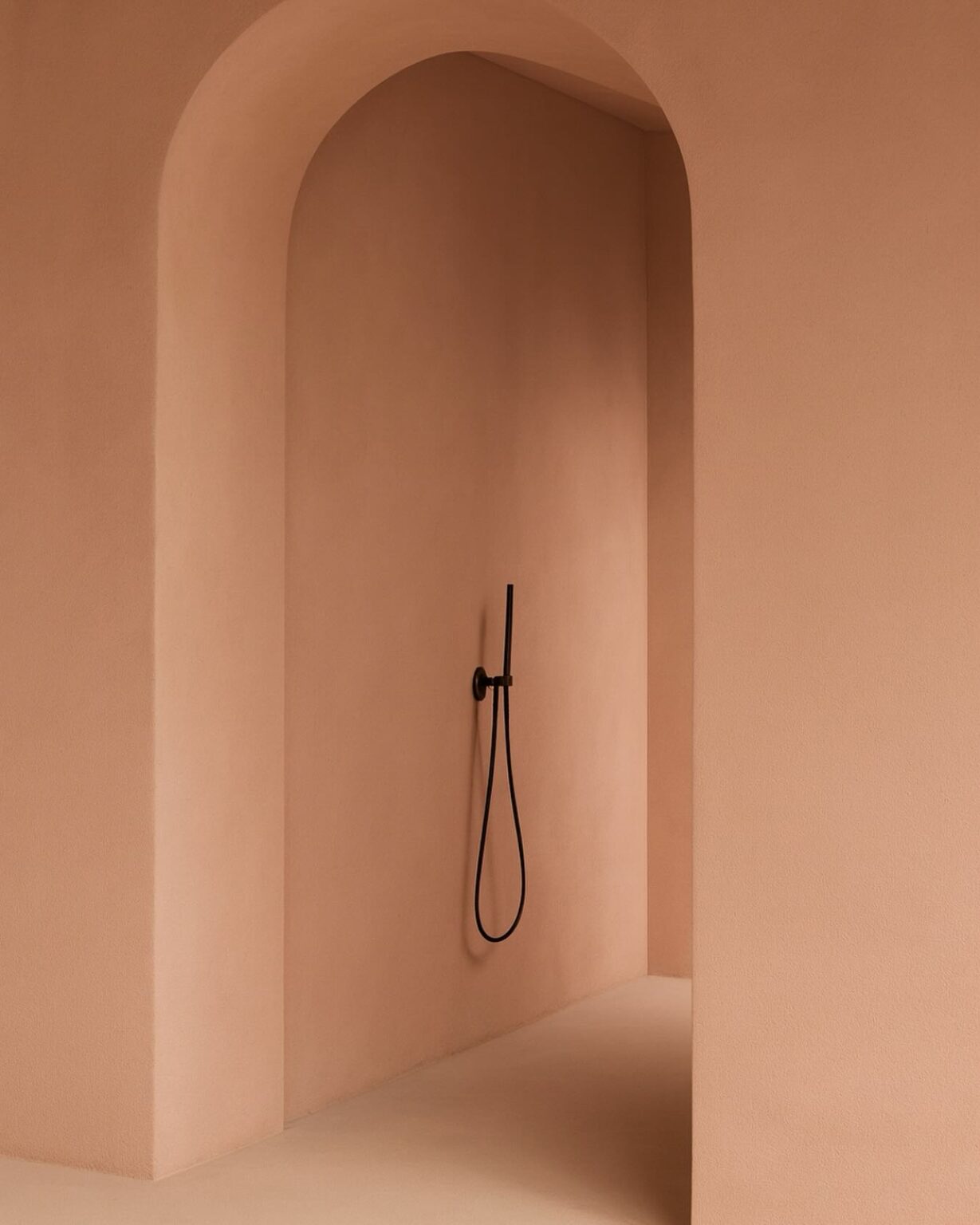
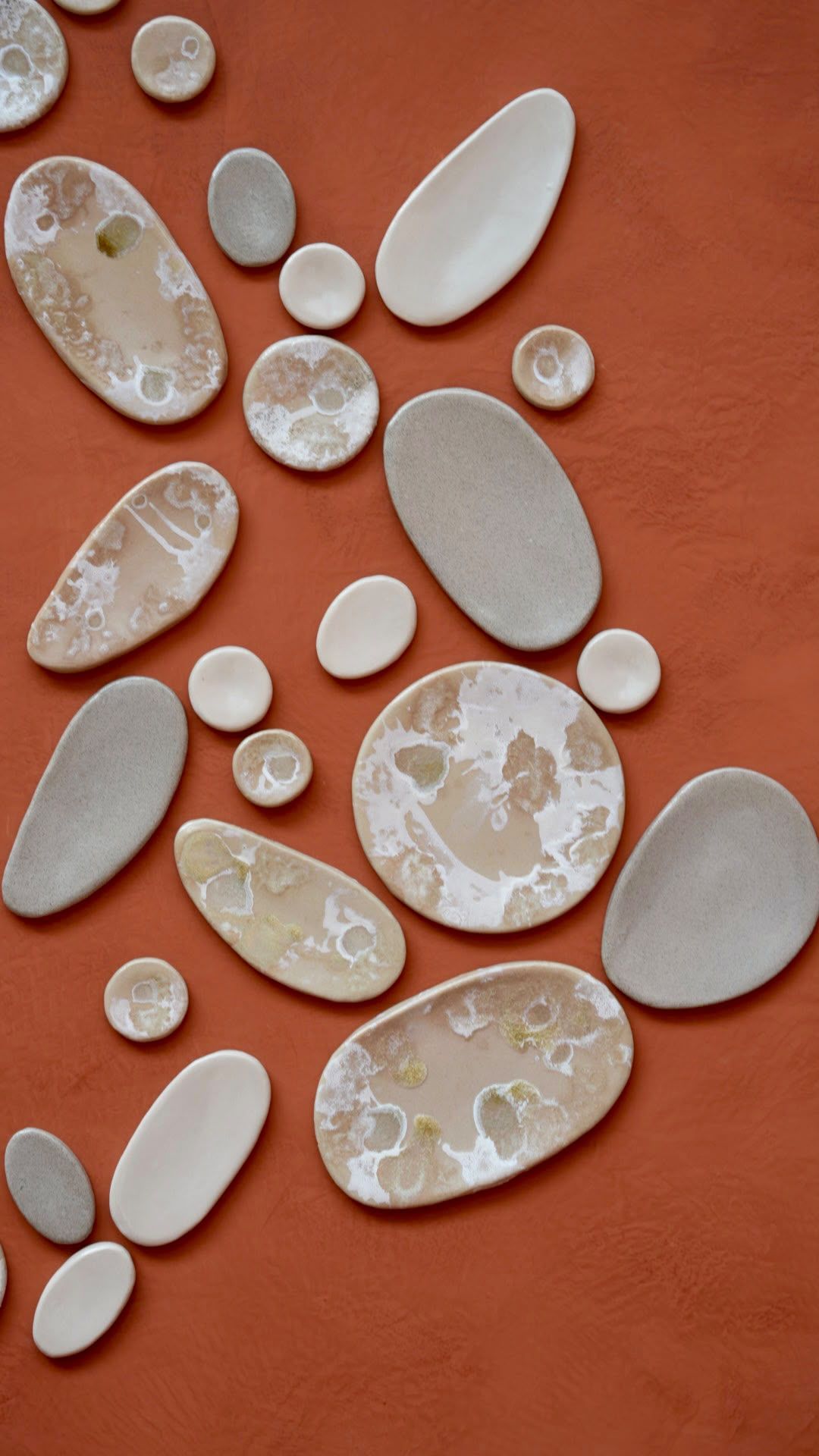
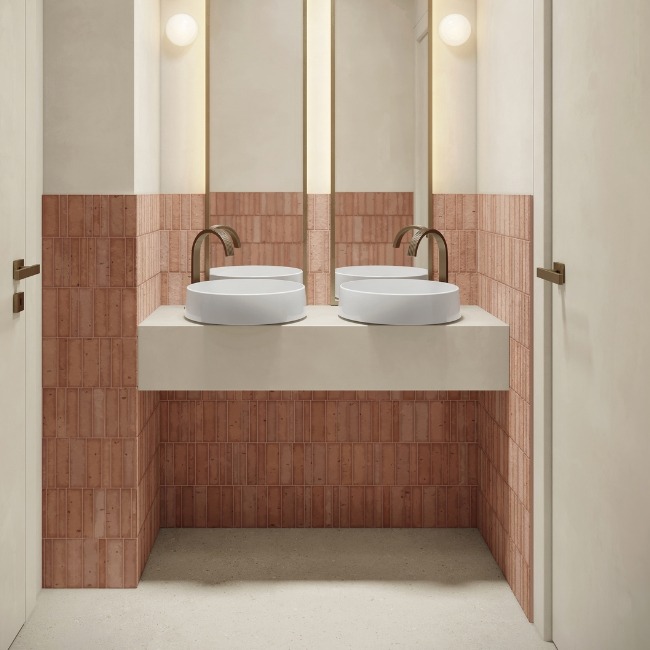
Ochres, red earths and deeper shadows. Combined with wood, linen or handmade ceramics, the bathroom recalls homes discovered on journeys.
Materials in harmony
Microcement follows floors and architectural forms. On walls away from splashing water, lime putty finishes add a more nuanced depth. Brushed as a limewash, they leave a light trace; worked as plaster, they gain a denser presence.
Marmorino, enriched with marble powder, offers another way to experience light. The finish and application technique allow for a quiet expression or a more pronounced decorative effect.
Lime plaster and limewash must remain outside areas exposed to splashing or running water. A protective coating does not turn them into shower linings.
Explore lime plaster and Marmorino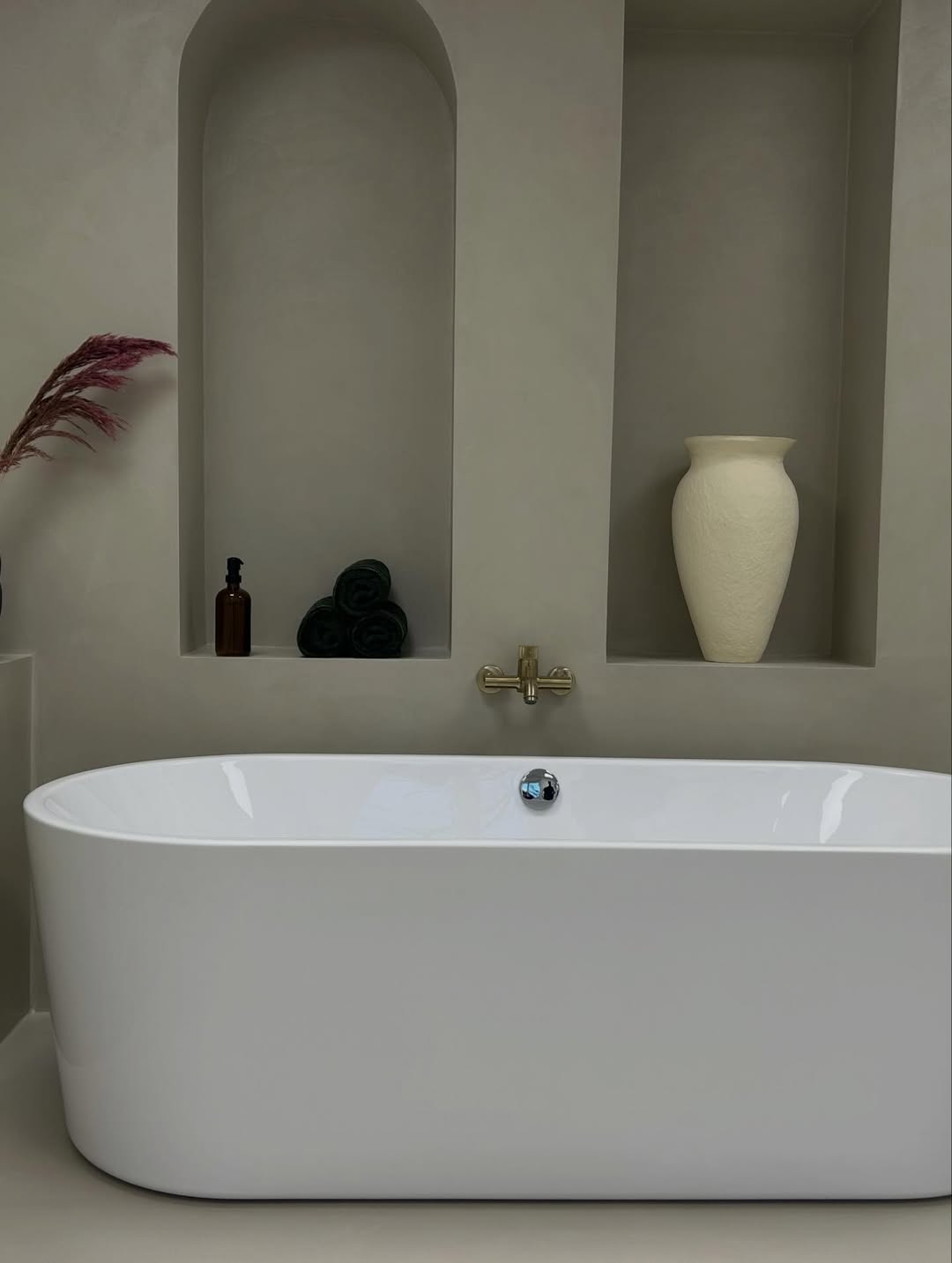
The rhythm of texture
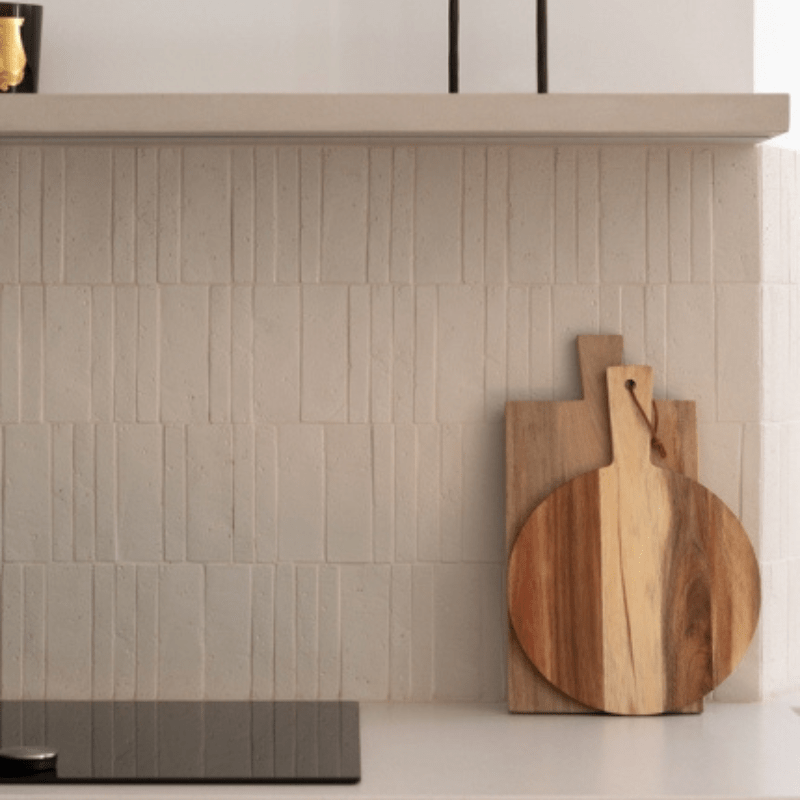
In harmony or contrast, concrete tiles introduce a pattern and highlight a detail, with protection suited to the intended use.
A textured wall, the edge of a basin, a curve: Carqis works alongside the continuous surfaces of microcement. Light reveals the small irregularities of each tile, adding depth to the room.
Discover Carqis concrete tiles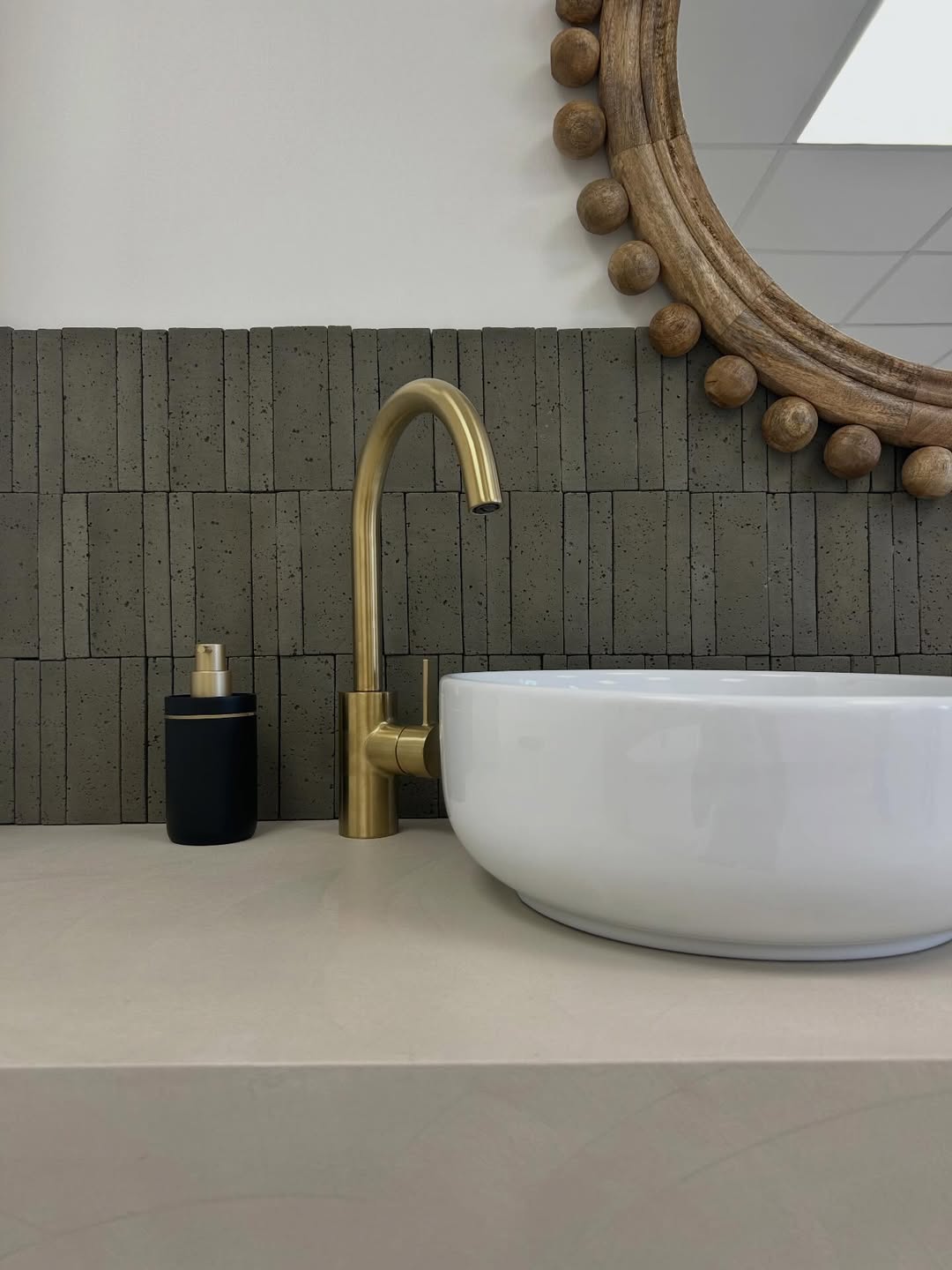
Down to the last detail
A painted wall, a door, a ceiling: each surface contributes to the atmosphere. Colour connects the materials while preserving their individual character.
Bring painted surfaces together with mineral finishes, choosing a finish to suit the substrate, maintenance needs and exposure.
For compatible walls and woodwork away from direct running water, a washable matt finish offering resistance to scratches, impacts and soiling.
An understated matt finish can soften the light and complete the composition. The product and finish should suit the ventilation and conditions in the bathroom.
IRIS · A shared colour language
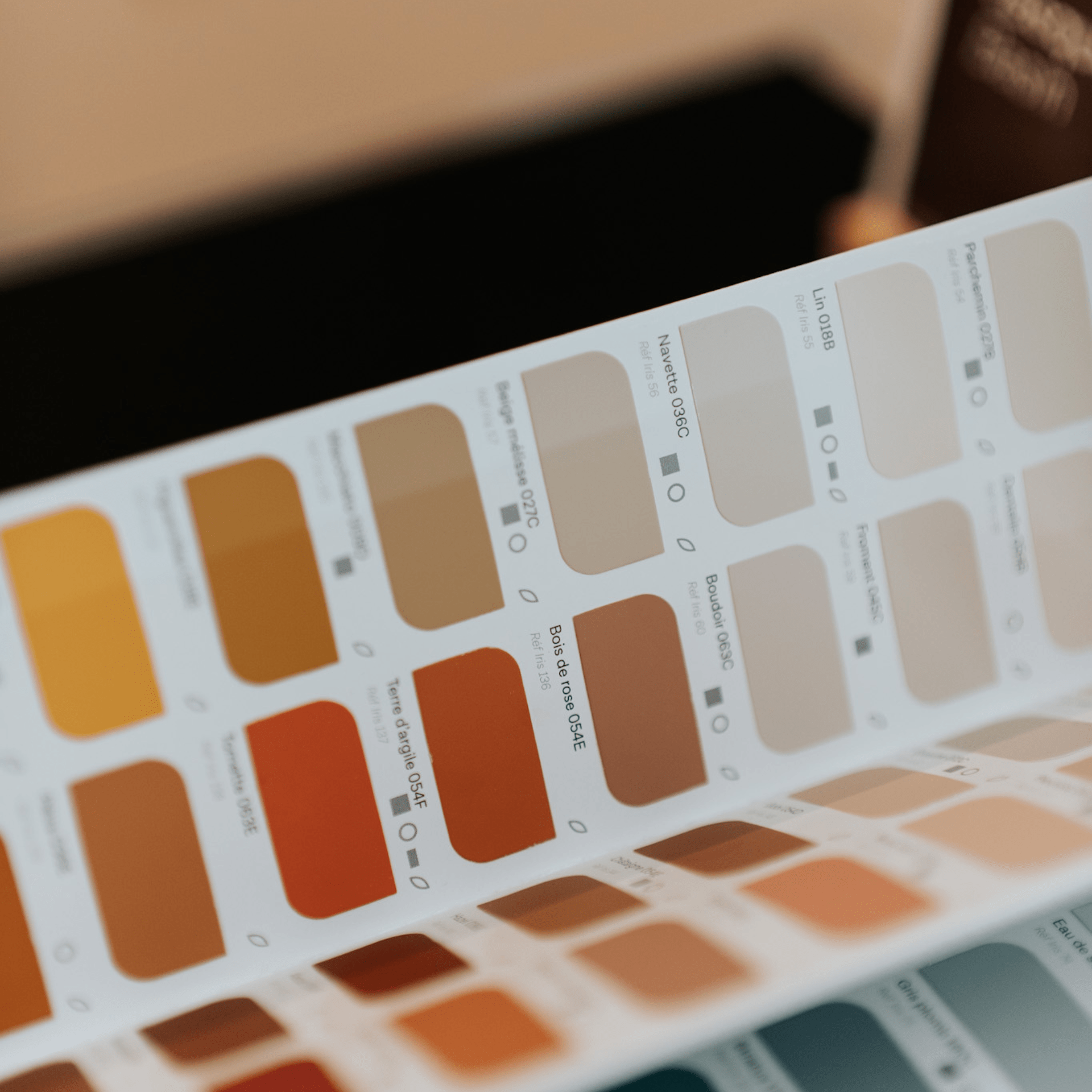
A tonal palette brings surfaces together. Harmonious shades connect the floor, walls and woodwork. Whites, earth tones, muted greens and deep blues offer different ways to shape the room.
The IRIS colour chart brings together 234 colours to explore these combinations. Available shades and their appearance vary with the material and finish: samples help refine the choice in the room’s own light.
Discover the IRIS colour chartSee colour on a larger sample (French)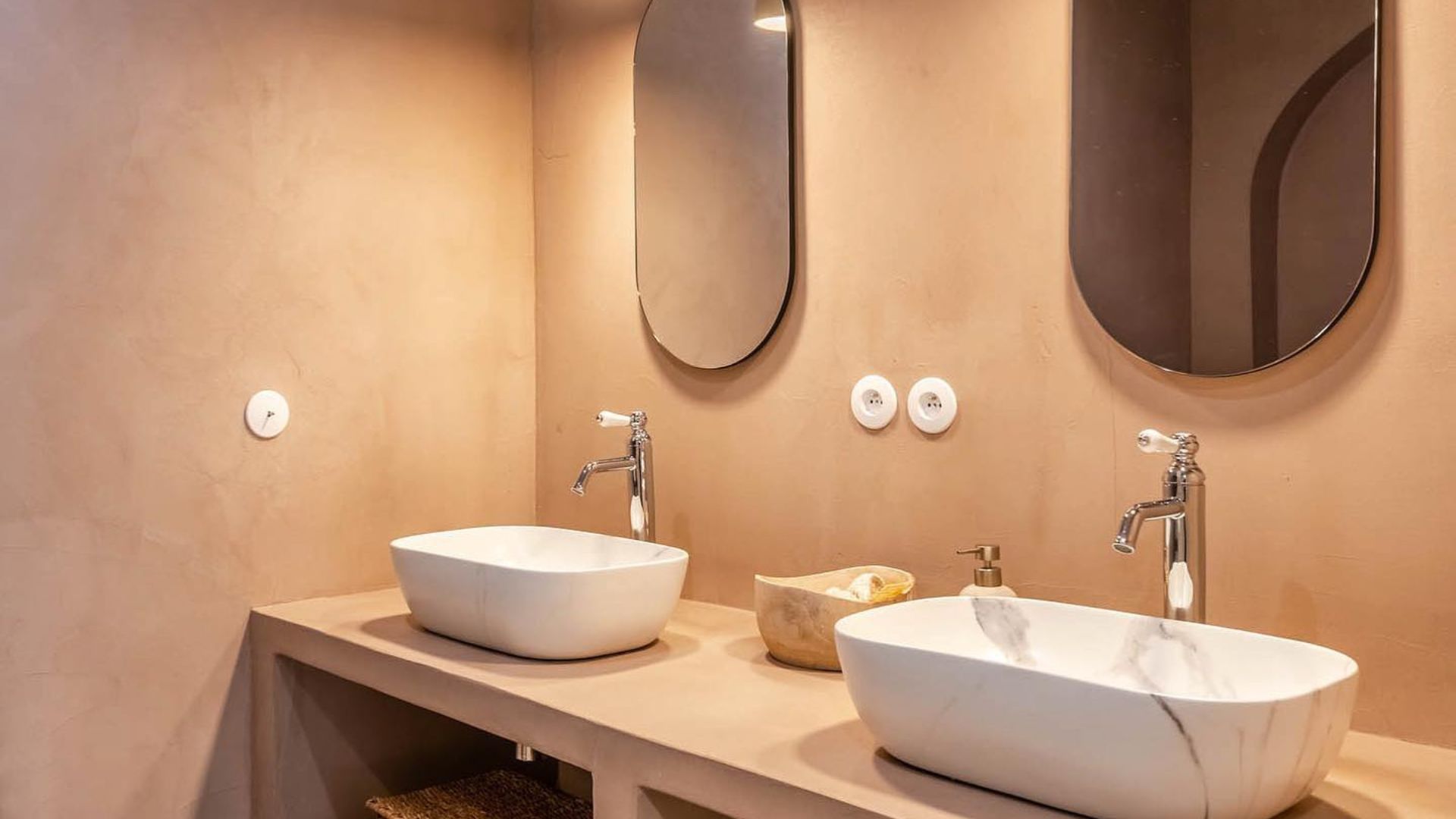
Beauty tested in use
A continuous finish relies on a complete system. Tests document the performance of the configurations examined; a project review identifies the appropriate specification for the floor, shower and exposed surfaces.
The installation manual references LNE report CX 1600936, under XP P05-010 and XP P05-011. The product documentation states maximum values of PN24 for barefoot use and PC20 for shod use, depending on the application method.
These values do not automatically apply to every finish. For a shower floor, the technical team specifies the texture and system to suit the intended use and the relevant test report. These French classifications should be assessed against the requirements of the project’s country.
The manual cites CSTB reports R2EM-11-26022578, R2EM-SIST-14-26047471 and DSR-SIST-22-26085256, covering characteristics including mechanical resistance, wear, adhesion, water permeability and chemical resistance.
Each result relates to the specimen and system described in the report. These tests alone do not constitute approval of every shower installation.
The two-component polyurethane impregnating sealer IF3 is intended for applications including bathrooms and walk-in showers. It protects the surface against water exposure, cosmetics and abrasion within the specified system.
The HL8 two-component water-based polyurethane varnish provides a matt velvet finish for interior decorative concrete. The choice of protection depends on exposure, the substrate and maintenance requirements.
Waterproofing beneath the finish, falls, drains, joints and the waiting period before water exposure remain essential. In-house abrasion and stain-resistance tests on protective finishes are distinct from independent laboratory reports.
Marius Aurenti has developed decorative materials in France since 1982. This experience extends through technical support, professional training and projects completed by the network. Samples, protective finishes and the review of junction details connect the design intention with the requirements of the site.
Meet the specialist networkDesigned to last
The quality of a bathroom lies as much in its preparation as in its appearance. The substrate, waterproofing, protective finishes and junction details determine the appropriate installation system.
Yes, where the configuration and specified system allow it. The decorative finish does not replace waterproofing beneath it. Falls, drains, junctions and protective finishes must be designed together. Showers require suitable professional installation and the specified waiting period before water exposure.
It can be considered after checking that the tiles are stable, firmly bonded and free from defects incompatible with the finish. Preparation must address flatness, tile joints and the requirements of the chosen system. Explore microcement over tiles and read the preparation guidance (French).
The budget is based on the surfaces actually treated: floors, walls, shower, vanity top or built-in features. Preparation, waterproofing and the complexity of details also affect the cost. The room’s floor area alone is not enough to price a complete bathroom. Explore microcement pricing (French) or request a project review.
As an initial reference for France, the figures published in November 2026 indicate approximately €150–€300 excluding VAT per m² of treated surface for bathroom materials and installation; a project-based quotation is preferable. An illustrative calculation, not a quotation: 20 m² of floors and walls to be coated would represent €3,000–€6,000 excluding VAT using this range. This is the area being coated, not the bathroom floor area. The quotation must identify preparation, waterproofing, protective finishes, details and delivery included or charged separately; sanitary fittings and plumbing are priced separately. Applicable tax is specified in the quotation. Labour, transport and taxes vary by country: these French figures are not an international installed-price offer.
Lime putty plaster, limewash and Marmorino can be considered on compatible surfaces away from splashing and running water. Showers and areas directly exposed to water require a different solution. Ventilation remains necessary whatever the finish.
Follow the instructions and curing times for the protective finish applied. Use soft tools and compatible cleaning products, rinse away residues and avoid standing water. Abrasives and concentrated chemicals can mark the finish. Read the care guidance (French).
The continuity is visual: necessary movement joints and connections to fixtures must be retained and correctly detailed. Slip resistance depends on the system, finish and conditions of use. Wet areas, particularly showers, require a solution confirmed as suitable for that exposure.
The result depends on a stable substrate, waterproofing and careful application. Movement or cracks in the substrate can affect the finish. Curing times mean the shower cannot be used immediately. Protective finishes require compatible cleaning products, and a local repair may remain visible in the material’s tonal variations. A preliminary assessment and professional installation help select the appropriate system and anticipate these constraints.
Installation time and the waiting period before exposure to water are separate. The Marius Aurenti installation manual specifies full curing of the protective treatment after 7 days at 20 °C and 60% relative humidity, with no exposure to water or chemicals during this period. The IF3 tutorial also states that full hardness is reached 7 days after the final coat. This reference does not replace the technical data sheet for the selected system: temperature, humidity and ventilation can affect curing. The installer confirms when the shower can be brought into use.
Bringing the atmosphere to life
A few images, a quality of light, colours you love.
We help connect that intention with the materials
and the possibilities of the space.
To prepare the conversation: project location, intended surface areas, substrate condition and programme.
Materials, textures and colours
Materials
MicrocementWall concreteLime & MarmorinoPaints & lacquersCarqis tilesConcreo & Conclad panelsAll materialsMicrocement · applications
Microcement over tilesMicrocement bathroomsMicrocement kitchensMicrocement stairsOutdoor microcementPlaces and perspectives
From an idea to its realisation
Choose materials and colours
The online shop is currently in French. Our team can assist in English.
The company and its expertise
Meet, discuss, choose